Truth Told Sideways


Idiot Factory
by Mark Brent
Idiot Factory examines why we suffer and why we don’t let go when we could. Through dark satire and psychological tension, it follows the gap between perception and reality, where distortions build, settle, and begin to feel like something we can’t live without.
We’re stuck in our heads, overthinking, replaying the past, trying to control what comes next, and calling it normal. If you can’t shut it off… if you keep looping the same thoughts, chasing certainty, or trying to manage everything just to feel okay—you’re not broken. You’re in the factory.
Idiot Factory is a punch to the face disguised as a conversation. Mark Brent writes from inside the mess, exposing the patterns behind overthinking, control, and anxiety and how those patterns quietly turn into a life of suffering.
This book isn’t a fix. It’s not a plan. It’s part rant, part creative essay, and a personal reckoning all at once that shows how we create our own suffering, the tools we already have to stop feeding it… and why we don’t use them.
Because we’re human.
This books comes out of addiction, divorce, spiritual collapse, and the slow realization that most suffering isn’t just what happens to us, it’s what we keep doing to ourselves.
Let’s get one thing out of the way: breaking the cycle isn’t easy. It’s not passive. It’s not some soft mindset shift. It’s a goddamn knife fight with your own ego—messy, uncomfortable, and real.
And if you don’t see it?
You don’t just stay stuck.
You build a life around it.
In This Book, You’ll See:
PART I: The Mirror — How We Actually Suffer• Why overthinking isn’t clarity—it’s a loop
• How control, certainty, and anxiety feel right… but keep you stuck
• The ways you replay the past and fear the future—and call it awareness
• How your brain builds stories that feel true but aren’t
PART II: The Break — What Stops the Cycle
• Why acceptance isn’t giving up—and why it feels like it is
• How fighting reality quietly fuels your suffering
• The difference between certainty and clarity
• Why the tools work… and why you resist using them
PART III: The Descent — What Happens If You Don’t
• How suffering becomes identity
• How control turns into quiet madness
• Why the world starts to feel upside down—and normal
• What it looks like to build a life around the very thing hurting you
What Makes This Book DifferentNot a system
Not a program
Not a polished version of “fix yourself”A psychological memoir written from inside the mess
A conversation, not instructions
Grounded in real experience and real patterns—not theory alone
No shortcuts. No soft language. No pretending
Perfect For You If…• You can’t stop overthinking
• You’re stuck in anxiety, control, or mental loops
• You replay everything and still don’t feel better
• You’re tired of self-help that sounds good but changes nothing
• You want to understand what’s actually happening—not just feel better for five minutesIntroduction
I didn’t write this book because I thought the world needed another self-help book. I wrote it because I needed it. I had to tell myself these things over and over just to keep from going under. To keep myself from circling back into the same loop, the same traps, the same idiot factory of suffering that I built with my own hands.
I’m not speaking from a mountaintop like a guru. I’m speaking from the dirty, gritty floor. From the ashes. From inside the damn factory itself, where the noise never stops and the machines of suffering grind on. That’s where I started writing, because I realized I had to see it clearly, name it honestly, or I was never getting out.
And since I’m a storyteller by nature, I couldn’t just write it like a manual. Manuals don’t save us. Stories do. Truth told sideways. What you’re holding is me, grabbing you by the collar like a friend in a coffee shop, saying: “Look at this. Do you see it too?” It’s not clean. It’s not polite. It’s a fire hose to the face, because sometimes that’s the only thing that wakes us up.
I’m not writing as someone cured, enlightened, or finished. I’m writing as someone just like you, a fellow sufferer, trying to understand the mess we’re in and trying to stop feeding it. What you’ll find here isn’t the magic answer. It’s just the raw truth as I’ve had to learn it, the same way I had to keep telling myself: this is what’s happening, this is what I’m doing, this is how I can finally step out into the bright light of a world that doesn’t give a damn about me. Yet a world that can provide an abundant, happy life, if I choose.
Welcome to the Idiot Factory. Imagine if a burnt-out therapist, a bitter philosopher, and an unhinged stand-up comic got together in recovery and wrote a book about why we keep setting our lives on fire. Why we suffer. And what might finally stop the burning. That’s this book. Not a guide. Not a cure. Just a brutally honest look, and maybe, if we’re lucky, a way out.
IDIOT FACTORY
Our Opinion Won’t Fix The World Breaking Our Own Hearts And We Grind We Came Here To Yell Our Brain’s Shady Narrator This Is Happening Stop Punching Brick Walls The Dumpster Cleanup Crew Pain Isn’t the Enemy The Backwards World The Asylum The Solution Isn’t a Solution
Chapters 1 - 5
The first movement of Idiot Factory shows how we manufacture our own suffering, then mistake it for truth, love, ambition, and purpose. It begins with outrage. We convince ourselves our opinions are weapons against a burning world, but most of the time we are only feeding the fire. We rage, judge, post, argue, and perform certainty because it gives us a temporary sense of control. Online and offline, we turn people into enemies, props, trolls, hypocrites, monsters, anything but complicated human beings. The result is not clarity. It is addiction. Righteousness becomes a drug, and every hit makes our world smaller.
Then the book turns inward, into relationships, where we repeat the same pattern with softer language. We say we want love, but often what we really want is safety, validation, and control. We pick partners according to old wounds, assign them roles, build silent cases against them, then call the collapse proof that we chose wrong. Heartbreak becomes another factory line: same fear, same story, new person.
From there, the grind takes over. Work, success, ambition, and hustle culture promise control if we just plan harder, sacrifice more, optimize better, and keep climbing. But the ladder is burning. The dream keeps moving. The life plan dissolves the second real life happens. Still, we keep blaming ourselves because it is easier than admitting the system, and the story we were sold, may never deliver what it promised.
Chapter four shows where all this suffering goes: online. Social media becomes the perfect machine for broadcasting pain, validating outrage, and turning discomfort into engagement. We don’t just scroll for information. We scroll for relief. For certainty. For the tiny hit that tells us we are right, they are wrong, and the chaos has a shape.
Chapter five explains why we come by it honestly. Our brains are not built for truth. They are built for survival. They crave certainty, rewrite the past, fear the future, inflate our confidence, and mistake emotional safety for reality. We are not idiots because we are stupid. We become idiots because ancient survival wiring got dropped into modern noise and started calling fear wisdom.
Together, these chapters establish the core argument: we do not merely suffer. We participate in our suffering. We defend it, narrate it, justify it, and organize our identities around it. The first step out is not peace. It is seeing the factory for what it is.
Chapters 6-9
The second movement of Idiot Factory is about learning how to step out of the suffering we create for ourselves, not by escaping pain, but by finally stopping the war against reality.
After exposing how we manufacture anxiety, outrage, heartbreak, and exhaustion, this section turns toward the hardest truth in the book: most suffering continues because we refuse to accept what already is. We fight reality like it personally betrayed us. We replay conversations, rehearse arguments, cling to resentment, obsess over fairness, and keep punching emotional brick walls long after the fight is over. We tell ourselves this resistance is strength, intelligence, or passion, when really it is fear wearing armor.
The book reframes acceptance completely. Acceptance is not weakness, passivity, or “letting people walk over you.” It is not becoming emotionless or pretending pain does not hurt. It is the ability to look directly at reality and stop demanding it be different before you allow yourself to live. Through stories of relationships, recovery, Stoicism, therapy, mindfulness, and faith, the section argues that freedom begins the moment we stop turning every uncomfortable moment into a referendum on our identity, worth, or control.
At the same time, the book exposes how addicted we are to suffering itself. Pain becomes familiar. Resentment becomes comforting. Outrage gives us identity. We shop our suffering to friends, social media, politics, and relationships looking for validation instead of release. Misery becomes a role we know how to play. We build entire versions of ourselves around wounds we refuse to stop touching. The longer we hold onto the story, the more it owns us.
This movement also introduces mindfulness, not as trendy wellness culture, but as survival. Mindfulness becomes the practice of returning to the present moment before fear, memory, and anxiety hijack reality. Instead of living trapped between regret over the past and terror about the future, mindfulness teaches us to notice what is actually happening now. Breath. Sound. Body. Awareness. Presence becomes the doorway to clarity because we cannot radically accept a moment we are not truly in.
By the end of this section, the deeper realization emerges: pain is unavoidable, but suffering is created through resistance. The ego constantly demands certainty, fairness, explanation, and control, but certainty itself becomes another prison. Real clarity comes when we stop asking life to match the script in our head and finally respond to what is actually here. The goal is not to become perfectly calm or spiritually enlightened. The goal is to stop making life harder by arguing with reality itself.
Together, these chapters form the emotional and philosophical turning point of Idiot Factory. They move the book from exposing the machine of suffering to teaching the reader how to stop feeding it.
Chapters 10-12
The final movement of Idiot Factory shows what happens when suffering stops feeling like a crisis and starts feeling like normal life.
By this point, the book has shown how we create suffering, why our brains cling to it, and how acceptance and mindfulness can interrupt the cycle. But these chapters ask the darker question: what happens if we don’t interrupt it? What happens when the factory becomes home?
The answer is the Backwards World. A place where madness does not look like chaos. It looks like routine. It looks like ambition, productivity, outrage, politics, coping, and “being fine.” Everyone is suffering, so no one recognizes suffering anymore. Contradictions become normal. We say we want peace while craving enemies. We distrust institutions until they serve our side. We condemn certainty in others while worshiping our own. We call collapse freedom because destruction at least gives us something solid to believe in.
This is where suffering becomes dangerous. It stops being personal and becomes cultural. The need for certainty turns politics, war, identity, and relationships into battlegrounds. We don’t want truth. We want confirmation. We don’t want healing. We want our pain justified. And when enough people do that together, the world starts to feel upside down. The factory basement becomes an asylum.
The asylum is what happens when suffering becomes managed instead of healed. We learn the language of wellness, boundaries, trauma, self-care, and coping, but we use it to stabilize our madness rather than escape it. We become functional sufferers. Productive. Branded. Diagnosed. Optimized. Quiet enough to pass. The danger is not that we fall apart. The danger is that we stop noticing we are still trapped.
These chapters also turn inward. The personal story reveals the cost of living inside unaccepted pain: drinking, numbness, resentment, disappearance, and the terrifying realization that collapse can look like survival from the outside. The asylum is not entered all at once. It is built slowly, through every refusal to accept what happened, every story we keep polishing, every wound we turn into identity.
Chapter twelve becomes the way out, though not a clean solution. There is no rescue, no magic fix, no final enlightenment. The way out is humility. It is surrender. It is mindfulness and radical acceptance used not to erase pain, but to stop feeding it. It is the willingness to see our own role in the fire, drop the need for certainty, and stop demanding that reality apologize before we agree to live.
The ending does not promise a painless life. It offers something harder and better: clarity. A life where pain still comes, but suffering is no longer treated as proof of identity, righteousness, or control. The final invitation is simple and brutal: if we are still suffering, we are still resisting something. And if we can see that, we can choose differently.
Excerpts From The Book
* Images AI generated from the actual text.

"We build our own suffering, brick by brick, thought by thought, and then wonder why the whole place keeps burning down."

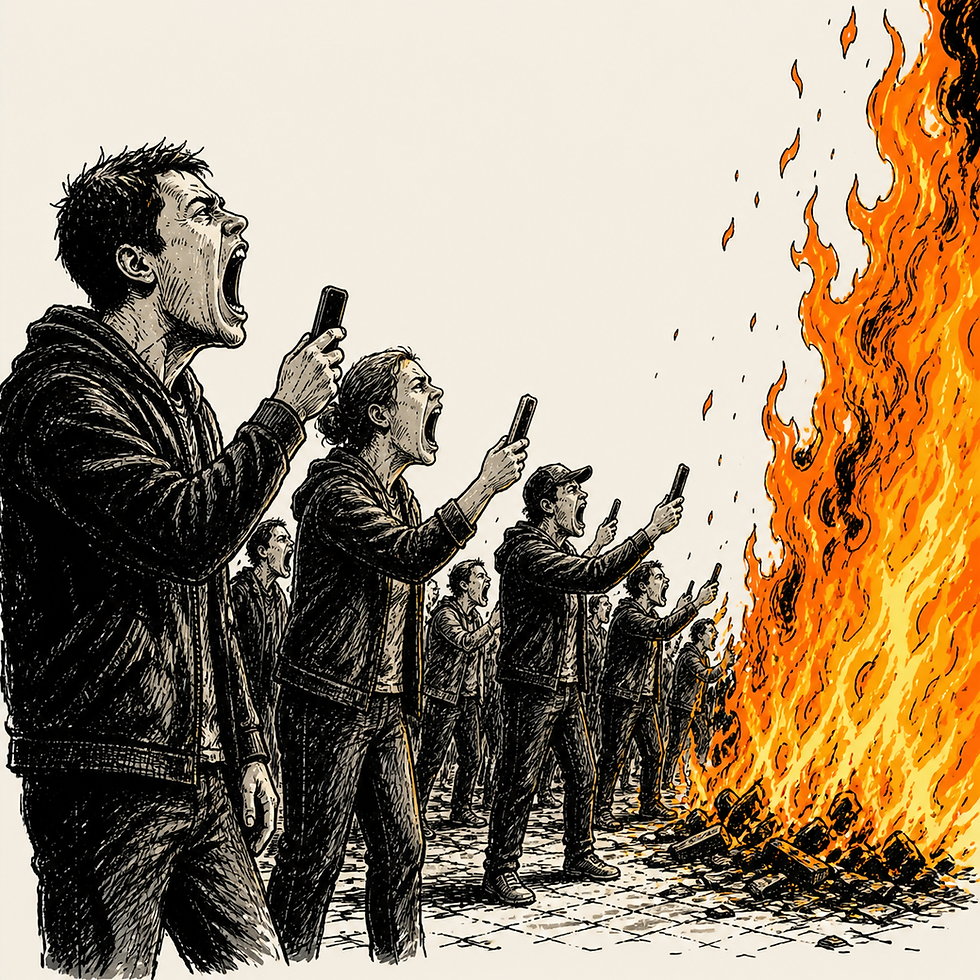
"We’re not stopping the fire.
We’re just screaming into the blaze, convinced it’ll stop the flames.”

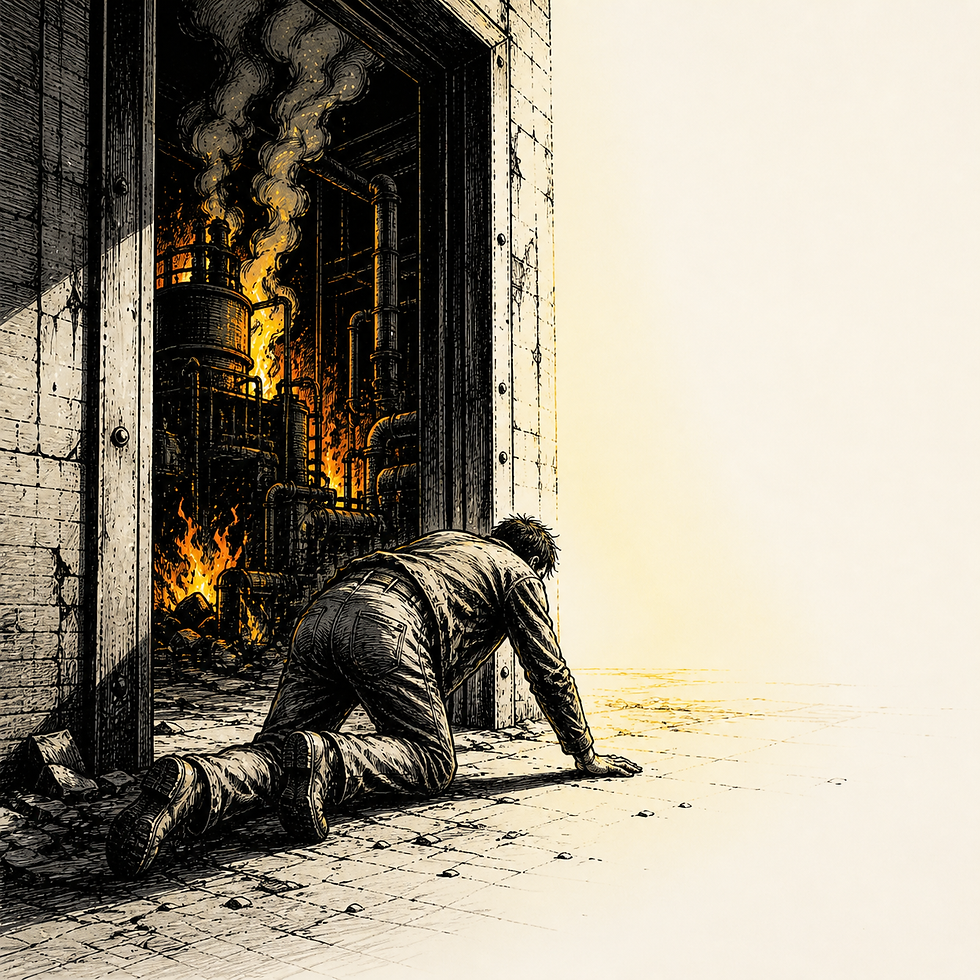
"I crawled out like a man who finally stopped negotiating with fire."
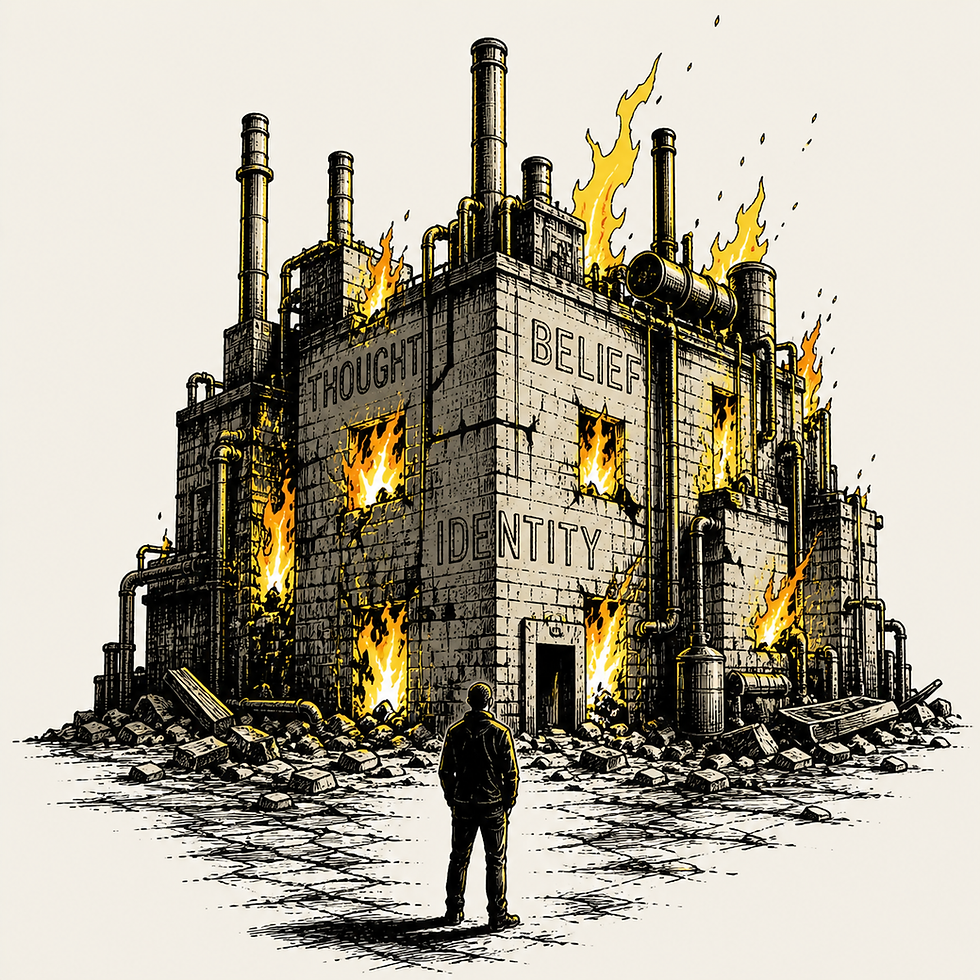
"We’re not stopping the fire. We’re just screaming into the blaze, convinced it’ll stop the flames.”
"We build our own suffering, brick by brick, thought by thought, and then wonder why the whole place keeps burning down."
"I crawled out like a man who finally stopped negotiating with fire."